
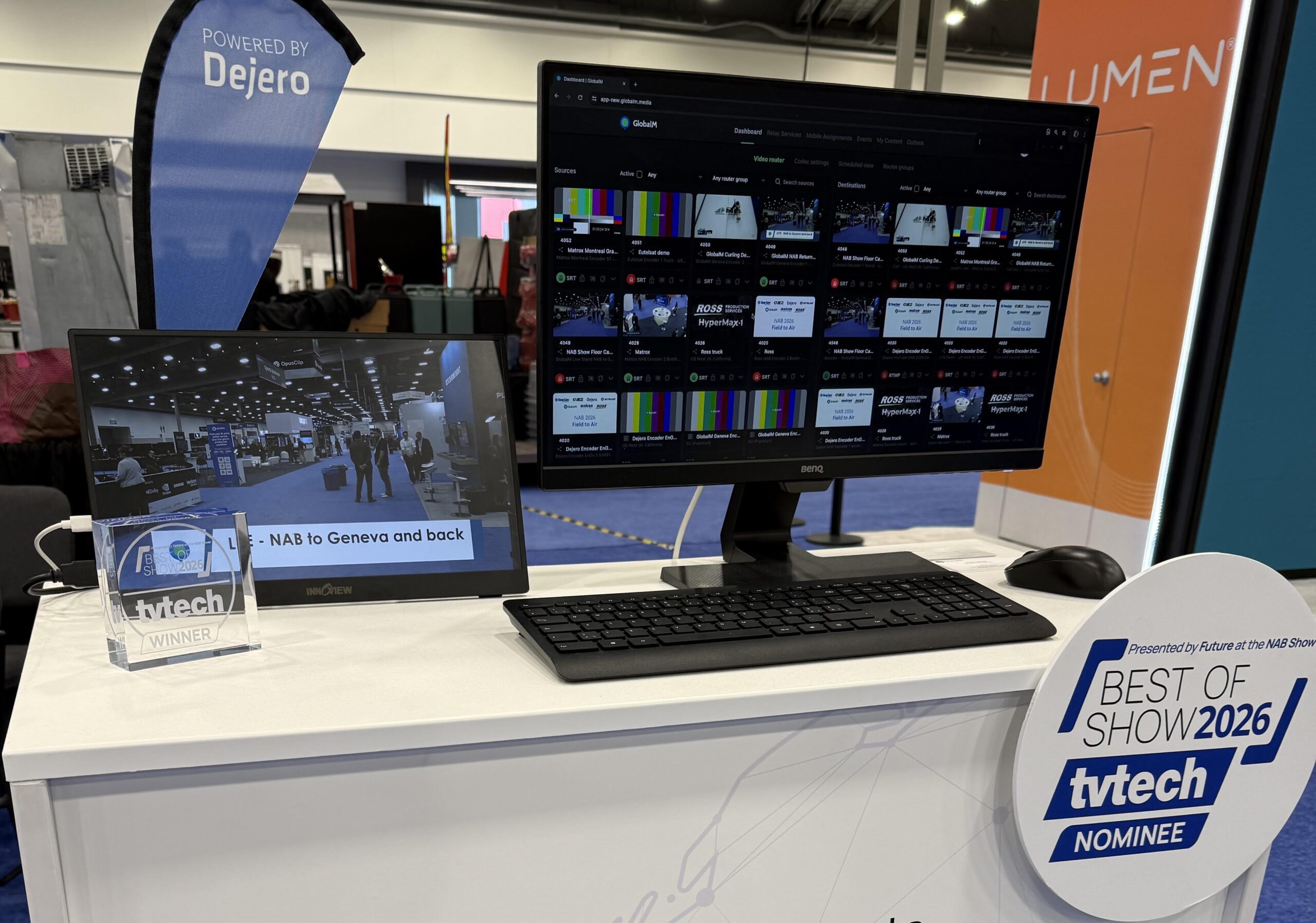
At NAB 2026, a consistent theme emerged across the show floor and in industry discussions. Satellite remains a core part of broadcast infrastructure, but the way it is used is changing.
This is not being driven by a single factor. It is the result of several developments happening at the same time, which together are reshaping how contribution and distribution are designed.
One of the clearest signals came from The Hive Group session, The Future of Satellite Replacement. The strong turnout and depth of discussion reflected a shared understanding across broadcasters, service providers and vendors that existing models are under pressure and need to evolve.
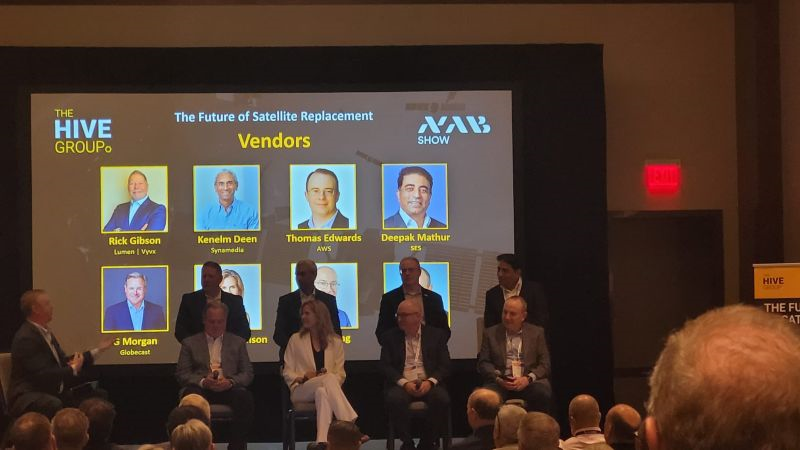
The Future of Satellite Replacement, HIVE Group breakfast, 21st of April 2026, Renaissance Hotel Las Vegas
A key part of this is spectrum. C band, which has historically supported a large portion of broadcast satellite services, is being repurposed in multiple regions to support mobile networks and future 6G services. This is reducing the amount of spectrum available for traditional broadcast use.
Alongside this, the rollout of 5G services in adjacent frequency bands has introduced interference challenges. This is particularly relevant for contribution workflows, where reliability has always been a defining requirement.
At the same time, there is a shift in how satellite capacity is being developed and used. Investment is moving towards LEO constellations, while GEO capacity in certain regions is becoming more constrained. Industry reporting has already highlighted that expected reductions in satellite capacity are prompting broadcasters to actively evaluate alternative and complementary delivery models.
Taken together, these factors are leading to a reassessment of how live video is delivered. Broadcasters, sports organisations and live event producers are not moving away from satellite, but are building hybrid workflows that combine LEO satellite, IP networks and cloud infrastructure. The objective is to maintain the reliability that satellite provides, while introducing greater flexibility in how content is distributed.
This shift was reflected throughout NAB, where the discussion has moved beyond whether change is needed, and is now focused on how to implement it in practical terms.
Within this context, GlobalM’s Distributed Video Gateway architecture is designed to sit across these environments. It acts as an operational layer that connects GEO, LEO and IP networks into a single workflow, allowing different transport methods to be used together without increasing complexity.
By enabling satellite, and in particular LEO, to operate within IP based environments, it becomes possible to maintain point to multipoint distribution while extending delivery to rights holders, OTT platforms and social channels from the same source.
As the industry continues to evolve, the requirement is not for a single replacement technology, but for a way to integrate multiple transport options into a coherent system. This is where software defined orchestration is becoming central to broadcast operations.
